





When Your Heat Stops: Emergency Heating Repair & Troubleshooting Guide — Knoxville, TN
A sudden heating outage is one of the most disruptive problems a homeowner or business can face — especially in cold weather when comfort and safety matter most. This guide walks you through safe, immediate troubleshooting steps you can try when your heat stops, explains common causes for furnaces and heat pumps, and helps you decide when the situation needs professional emergency repair. You’ll learn how to check thermostats, power and breakers, filters, pilot or ignition systems, and outdoor heat pump behavior so you can tell whether it’s a simple DIY fix or a job for a licensed technician.
A-1 Certified Service, Inc. is a local Knoxville HVAC contractor included here as a resource for escalation and emergency service. Their offerings include heating repair, installation, maintenance, furnace and heat pump service, emergency response, flexible financing, maintenance club memberships, and a partnership with Daikin. Start with the troubleshooting steps below to narrow the cause, then follow the guidance on when to contact a professional for emergency furnace repair or heat pump service. The sections that follow cover immediate actions, furnace troubleshooting, heat pump diagnostics, red-flag signs that require a pro, and preventive maintenance to reduce future emergencies.
Immediate steps to take when your heating system stops
When your heating stops, begin with a short, prioritized set of checks that catch the most common and easiest-to-fix problems: thermostat settings, power supply, visible error indicators, and airflow. Most “no heat” calls are caused by simple issues — wrong thermostat mode, dead thermostat batteries, tripped breakers, or clogged filters — and fixing these often restores heat quickly without a service call. Start by confirming the thermostat is on Heat with a setpoint above room temperature, then verify power to the furnace or heat pump and inspect the air filter and outdoor unit for obvious problems.
- Confirm Thermostat Mode and Setpoint: Make sure the thermostat is set to Heat, the fan is on Auto, and the set temperature is higher than the room temperature.
- Check Power and Breakers: Look for a tripped breaker, a turned-off furnace switch, and any indicator lights on the equipment.
- Inspect Filters and Vents: Replace a dirty filter and make sure supply vents are open and not blocked.
- Look for Outdoor Unit Issues: On heat pumps, check the outdoor unit for heavy ice or debris that could prevent operation.
These quick checks usually reveal whether you can resolve the issue or whether the system needs professional attention. Next, walk through thermostat-specific checks to rule out control or connectivity problems.
| Thermostat Issue | Symptom | Quick Fix |
|---|---|---|
| Wrong Mode | Heat won’t turn on | Switch to “Heat” and raise the setpoint |
| Dead Batteries | Blank display or unresponsive unit | Install fresh batteries |
| Schedule/Hold Active | Unexpected setpoints | Cancel hold or adjust the schedule |
| Smart Thermostat Offline | Can’t control remotely | Check Wi‑Fi and app connection; reboot if needed |
Checking and adjusting your thermostat
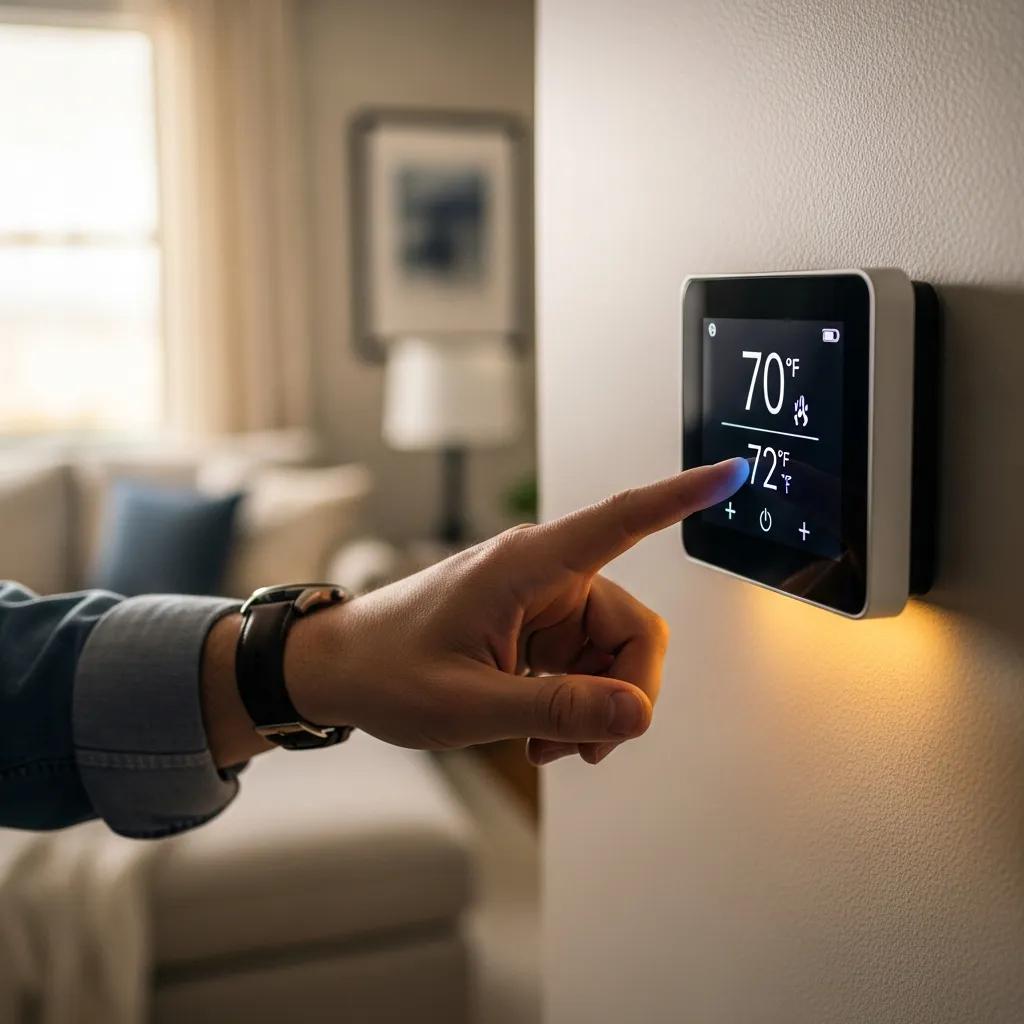
The thermostat tells your furnace or heat pump when to run, and incorrect settings are a frequent cause of “no heat” calls. Confirm the device is set to Heat (not Cool or Off) and raise the setpoint a few degrees to trigger a call for heat. Replace the batteries if the screen is dim or the unit won’t respond, and check for schedule, hold, or vacation modes that might override manual controls. If you have a smart thermostat, make sure the app shows the unit as connected — restart the thermostat or router if it appears offline.
If the thermostat looks powered and correctly set but the system still won’t run, note any error codes or messages on the display — these often point to control or communication issues that need professional diagnosis. After verifying the thermostat, move on to checking the home’s power and circuit breakers, since a working thermostat with no furnace response often indicates an electrical or control-side problem.
Inspecting your power supply and circuit breaker
Power interruptions and tripped breakers are common, safe-to-check causes of a heating outage and should be addressed early in troubleshooting. Find the furnace or heat pump service switch (usually near the unit) and confirm it’s on, then check the main electrical panel for any tripped breakers labeled HVAC, furnace, or outdoor unit — reset them if needed. If a breaker trips immediately after resetting or repeatedly during operation, stop DIY attempts and treat that as an electrical red flag.
Follow basic safety rules: don’t open the panel beyond resetting a breaker, never attempt internal electrical repairs, and evacuate and call a professional if you notice burning smells or smoke. Once power is confirmed stable, inspect the furnace or heat pump for visible indicators such as error codes, unusual noises, or safety shutoffs that will guide the next steps.
Troubleshooting common furnace problems when there is no heat
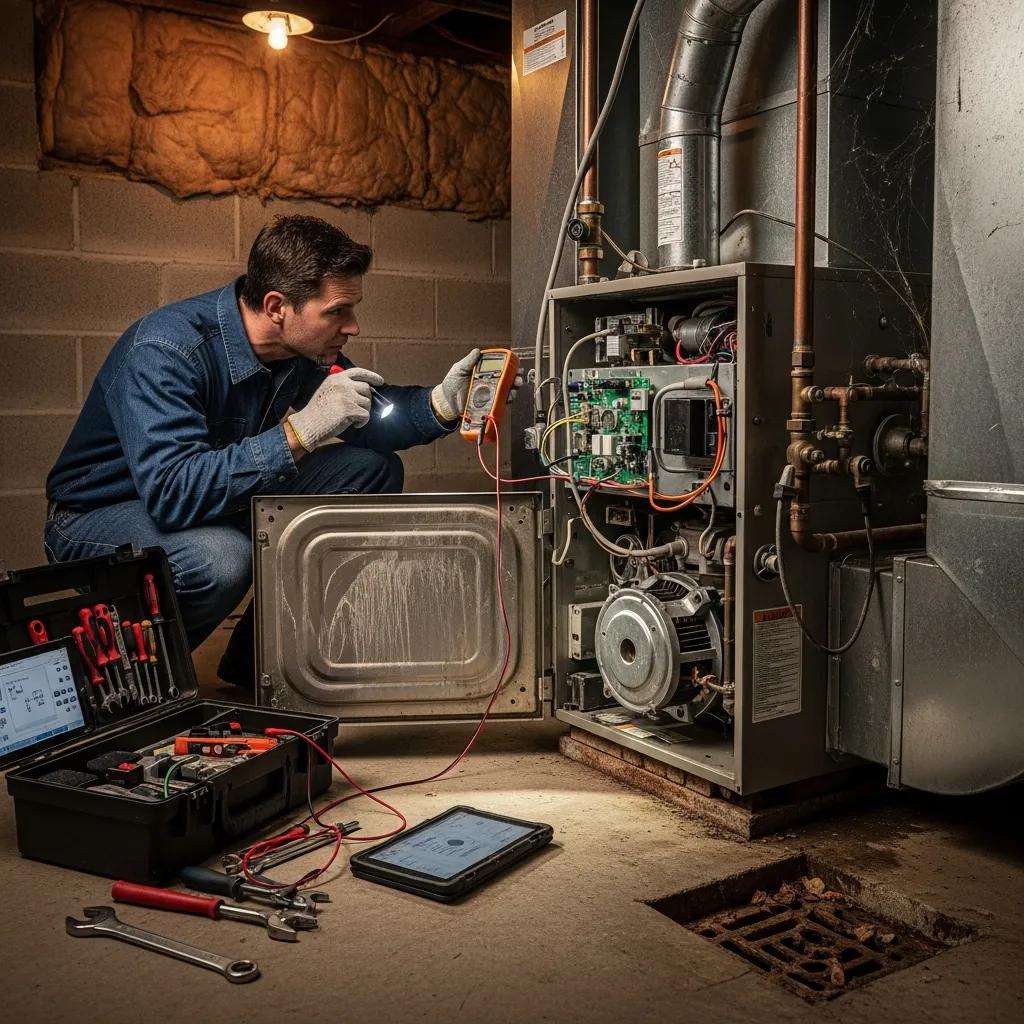
Furnaces can stop producing heat for several reasons: pilot light or ignition failures, clogged filters that cause airflow restrictions and safety lockouts, or component failures like a faulty flame sensor or blower motor. Knowing the likely causes, how they affect operation, and what a homeowner can safely do helps you separate quick fixes from conditions that need a trained technician. Always look for visible or audible signs at the furnace before attempting relights or inspections, and follow manufacturer safety guidance for gas equipment.
| Symptom | Likely Cause | Immediate Action |
|---|---|---|
| No flame or ignition | Pilot/igniter failure or gas valve issue | Check for gas smell; if none and the manual allows, follow the relight steps |
| Furnace runs then shuts off | Dirty filter or fouled flame sensor | Replace the filter; gently clean the flame sensor if comfortable, otherwise call a pro |
| Loud humming or no blower | Blower motor or capacitor problem | Verify power and breakers; stop use and call a technician if noise continues |
| Error codes on control board | Safety lockout or sensor failure | Record the code, power-cycle once, and contact service if it repeats |
Signs of pilot light and ignition failures
Pilot and ignition systems light the burner; failures usually show as no heat, repeated ignition attempts, or yellow/weak flames that suggest incomplete combustion. Watch for no flame, constant clicking without ignition, or any smell of natural gas — if you smell gas, evacuate immediately and notify emergency responders and the utility company. For older furnaces with a manual pilot, only attempt relighting if you’re confident and following the manufacturer’s instructions; otherwise call a licensed technician.
If relighting is allowed and succeeds, watch the flame color (a steady blue flame indicates proper combustion) and run the system through a full cycle to ensure stable operation. Repeated failure to maintain a flame or erratic ignition usually points to a bad igniter, gas valve, or control board and should be handled by a professional for safety and code compliance.
How a dirty air filter affects furnace performance — and how to fix it
A clogged air filter restricts airflow, making the furnace work harder, reducing heat output, and possibly triggering high-limit switches that shut the system down to prevent overheating. Replacing a dirty filter often restores airflow and resolves many “no heat” calls while improving efficiency and indoor air quality. Filters include size and airflow direction markings — turn off power, remove the old filter from the return or filter slot, note the size on the frame, and install a new one in the correct direction.
If changing the filter doesn’t restore heat, or you see persistent overheating, frequent short cycling, or heavy dust inside the cabinet, those signs suggest deeper issues like a failing blower motor or blocked ducts that require professional diagnostics. Regular filter changes and correctly sized filters are a low-cost preventive measure that lowers emergency repair risk and helps equipment last longer.
Common causes and solutions when a heat pump won’t heat
Heat pumps move heat rather than generate it, so their failure modes differ from furnaces. Typical problems include low refrigerant, normal or stuck defrost cycles, outdoor unit icing, and failures in the compressor or reversing valve. Identifying heat pump-specific symptoms — long run times, frost buildup, or weak warm air — helps determine whether the issue is normal operation or needs certified service. Homeowners should stick to visible inspections and basic power checks and avoid handling refrigerant or internal repairs that require licensed technicians.
| Condition | Observable Sign | Recommended Check / Next Step |
|---|---|---|
| Low refrigerant | Weak heat, long cycles, outdoor coil frosting | Check airflow and breakers; do not add refrigerant yourself — call a licensed tech |
| Normal defrost cycle | Short-term outdoor icing that clears | Observe for a few minutes; defrosting is normal in cold, humid conditions |
| Continuous icing | Thick ice that won’t clear | Clear light snow and debris, then schedule service if ice returns |
| No compressor run | Outdoor unit silent or only humming | Verify breakers and disconnects; call a pro for electrical or compressor diagnosis |
How low refrigerant levels affect heat pump performance
Low refrigerant reduces a heat pump’s ability to move heat, producing longer run times, lower indoor temps, and possible frosting on the outdoor coil. Symptoms usually worsen over time. Because handling refrigerant is regulated and requires special tools and leak detection, homeowners should not add refrigerant themselves — doing so risks the environment and may void warranties. First check for airflow problems or blocked outdoor airflow; if symptoms continue, schedule certified service to find leaks, repair piping, and recharge to manufacturer specs.
While you wait for service, use safe supplemental heat and open supply vents to maximize available output. Note symptoms and when they occur to help the technician diagnose intermittent refrigerant issues quickly. Proper leak repair and recharge restore efficiency and protect the compressor and other components.
Understanding the defrost cycle and outdoor unit icing
A heat pump’s defrost cycle briefly reverses operation to melt frost on the outdoor coil, so you may see temporary melting and on-off operation — that’s normal in cold, moist weather. Problematic icing happens when heavy ice persists, the defrost cycle can’t clear the coil, or ice blocks airflow around the unit, which can shut the system down and stress the compressor. For light surface ice, gently remove loose snow and clear debris around the unit, but never chip ice off the coil or use hot water — that can damage fins and components.
If ice returns quickly after clearing or the unit stays iced for long periods, schedule a professional inspection to check refrigerant charge, defrost controls, and outdoor fan performance. Persistent icing often signals a mechanical or refrigerant fault that needs certified repair.
When to call A-1 Certified Service for emergency heating repair in Knoxville, TN
Some heating problems are emergencies and require a trained technician rather than DIY fixes — examples include the smell of gas, carbon monoxide detector activation, visible smoke or fire, repeated breaker trips, and total system failure during extreme cold. Call a professional when safety is at risk or your troubleshooting doesn’t restore operation; licensed technicians have the tools and procedures to diagnose combustion, electrical, and refrigerant issues safely. Use a clear red-flag checklist to decide when to escalate rather than keep troubleshooting yourself.
- Gas smell or suspected leak: Evacuate immediately, avoid using electrical switches, and call emergency responders and a licensed technician.
- Carbon monoxide alarm activation: Treat as an immediate emergency — evacuate and contact emergency services and HVAC professionals.
- Visible smoke, flame, or burning odors: Shut off power only if it’s safe, evacuate, and call for professional emergency response.
- Repeated electrical breaker trips or burning electrical smells: Stop using the system and arrange for professional repair.
- No heat during extreme cold with risk of frozen pipes: Contact emergency heating services to prevent property damage.
These warning signs prioritize occupant safety and property protection. When they appear, professional diagnostic and emergency heating repair is the right next step. The table below explains what homeowners should do immediately and how technicians will help.
| Emergency Sign | Immediate Homeowner Step | Professional Role |
|---|---|---|
| Gas odor | Evacuate and call emergency services | Technicians locate and repair leaks safely |
| CO alarm | Evacuate, ventilate if safe, call emergency services | Trained pros test combustion and ventilation systems |
| Repeated trips | Stop using the unit | Technicians diagnose electrical faults and repair safely |
Warning signs that require professional heating repair
Any sign of combustion problems, electrical faults, or failures that persist after basic checks calls for a professional. Gas odors, carbon monoxide detector alerts, visible smoke, and repeated electrical trips are immediate hazards that require evacuation and emergency service. Other serious indicators include a furnace that runs but blows cold air with correct thermostat settings, an outdoor heat pump that stays iced solid after defrost attempts, or loud mechanical noises from a blower or compressor that suggest imminent failure.
If you see these symptoms, take immediate safety steps — evacuate if gas or CO is suspected, shut off power to the heating system only if it’s safe, and contact an HVAC contractor for emergency assessment. Telling the technician what you observed and which DIY steps you tried will speed diagnosis and help them bring the right parts and tools.
How A-1 Certified Service provides 24/7 emergency heating solutions
A-1 Certified Service, Inc. offers emergency heating services across Knoxville and nearby communities, delivering on-site diagnostics and temporary measures to restore heat when possible. When you call their emergency line, expect safety triage, a focused inspection, and short-term fixes to get heat back while they diagnose the root cause. If replacement is needed, they’ll provide an installation estimate and explain financing or maintenance options.
When contacting emergency service, be ready to describe symptoms, recent behavior, and any safety alarms so technicians can triage effectively and bring the proper equipment. Specific response times and guarantees vary, but A-1 Certified Service is listed here as a local resource for urgent furnace and heat pump repairs and for arranging follow-up maintenance to prevent repeat emergencies.
How preventative HVAC maintenance keeps your heating system reliable
Preventive maintenance lowers the chance of sudden heating failures by catching wear and emerging faults early, keeping combustion and heat-transfer components clean, and ensuring electrical and control systems work correctly. Annual tune-ups for furnaces and heat pumps restore efficiency, prevent many common “no heat” causes, and can extend equipment life. Regular inspections also protect safety by verifying combustion integrity, gas connections, and carbon monoxide mitigation measures.
Key homeowner steps include changing filters on schedule, keeping outdoor units clear of debris, scheduling yearly professional tune-ups, and joining maintenance plans that offer priority scheduling and discounts. The benefits below summarize why maintenance is a smart investment to reduce emergency repairs and energy costs.
- Improved Efficiency: Cleaning and calibration reduce energy use and lower heating bills.
- Fewer Breakdowns: Early detection of worn parts prevents emergency failures in cold weather.
- Enhanced Safety: Inspections uncover combustion or electrical issues before they become hazards.
A-1 Certified Service offers maintenance club memberships and annual tune-ups to help homeowners keep up with these tasks, providing priority service and savings that reduce the total cost of ownership over time.
Benefits of an annual furnace and heat pump tune-up
An annual tune-up targets the parts that matter most: cleaning burners and heat exchangers, checking ignition and safety controls, verifying refrigerant and defrost operation on heat pumps, and testing blower motors and electrical connections. This service restores design efficiency, reduces cycling and wear, and often uncovers small issues — like failing capacitors or weak igniters — before they become no-heat emergencies. Regular service also helps preserve manufacturer warranties and builds a documented maintenance history useful if replacement becomes necessary.
Most pros recommend scheduling service before the heating season so systems start the cold months in peak condition. During a tune-up, technicians will also advise on filter types, thermostat settings, and homeowner steps that reduce emergency repairs. Investing in scheduled maintenance usually costs less than one-off emergency repairs and improves overall reliability.
How maintenance club memberships deliver priority service and savings
Maintenance club memberships bundle regular tune-ups, priority scheduling, and discounts on parts and repairs into a single program that reduces downtime and predictable costs. Members typically get service reminders, preferred appointment windows during busy periods, and reduced diagnostic or service fees compared with one-off calls. These perks make it easier to follow recommended maintenance and avoid the higher cost and inconvenience of urgent repairs.
If you’re worried about unexpected bills, flexible financing options can smooth payments and speed access to technicians when problems occur. A-1 Certified Service’s maintenance memberships and financing choices are referenced here as helpful solutions to keep homes comfortable and reduce emergency heating incidents over time.
A-1 Certified Service, Inc. is available as a local Knoxville resource for emergency heating repair, estimates, and ongoing maintenance. If your troubleshooting leaves safety concerns or persistent no-heat conditions, contact their emergency service or maintenance team to schedule a professional assessment and repair. Their combination of emergency response, maintenance plans, and financing can help restore heat quickly and lower the chance of repeat failures.
Final thoughts
Keeping your heating system in good working order is essential for comfort and safety in cold weather. By following the troubleshooting steps here and recognizing when to call a professional, you can handle heating emergencies more effectively and prevent future problems. A-1 Certified Service is ready to support you with emergency repairs and maintenance solutions tailored to your needs — reach out to learn more and keep your home warm and safe.